3D imaging creates molecular maps of hidden m - EurekAlert! for Dummies


Some Known Facts About California Seafloor Mapping Program - USGS.
Suzette Kimball, director of USGS. But as Kimball points out, the EMU project is a considerable action forward in the mission to thoroughly map the whole ocean. " Official Info Here will work as a fresh resource for enhancing our understanding of the ocean's structureits salinity, temperature level, oxygen levels, and nutrientsin countless locations," she stated.
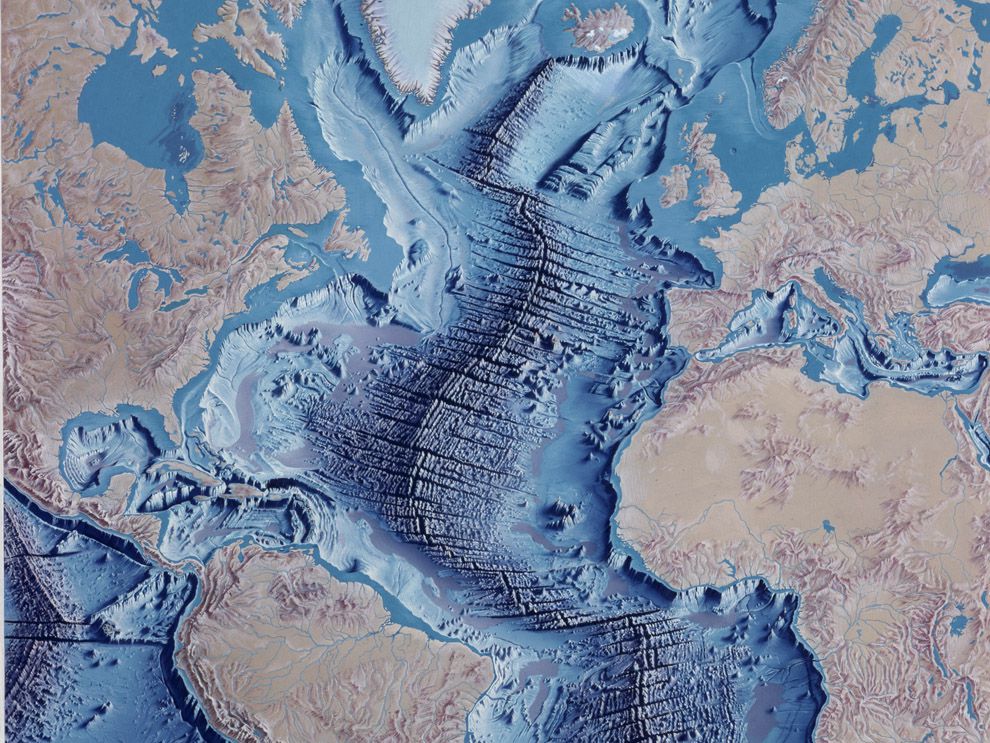
3-D Dive Maps Created by ArtToMedia- Scuba Diving
Each unit is a physically and chemically unique area of the ocean identified by 6 variables: temperature level, salinity, dissolved oxygen, nitrate, phosphate, and silicate. While GIS has actually been utilized time and again to map the 2D surface of the ocean, in addition to the 2D seafloor, this is among the first uses of the technology to imagine, define, and examine the 3D volumetric space between the surface area and the bottom of the sea on a worldwide scale.
The EMUs are made up of a point mesh framework of around 52 million international measurements of six key variables (collected over a 50-year duration) that represent the physical and chemical residential or commercial properties of the ocean and are most likely to impact how marine plants and animals react to their environment. As soon as this mesh was created, the team used strenuous k-means statistical clustering to group together locations with comparable homes.

High-resolution depth model for the Great Barrier Reef and Coral Sea - Deepreef Explorer
With the global EMU map, there is now scientific support for marine spatial preparation and management (to accommodate the numerous uses of the ocean, from business fishing and shipping to entertainment), creating new marine safeguarded locations, and comprehending the impacts of environment modification and other disruptions on all sort of ecosystems.
The World's Ocean - Google Earth for Beginners
Teachers and trainees can use the Explorer app, complimentary of charge, to see 3D ocean information both in the classroom and in the field, as it is meant to boost laboratory tasks and field workouts. The EMUs can be quickly viewed in the Ecological Marine Unit Explorer. Dealing with the EMUs extends far beyond the classroom as well.
Interest in the EMUs is far-reaching. The project was initially commissioned by the Group on Earth Observations (GEO), an intergovernmental collaboration that aims to open up access to earth observation information to help people worldwide make better decisions, so the results were constantly meant to be shared extensively.